Darius — King of Persia
For other men named Darius in Scripture, see the Darius disambiguation page.
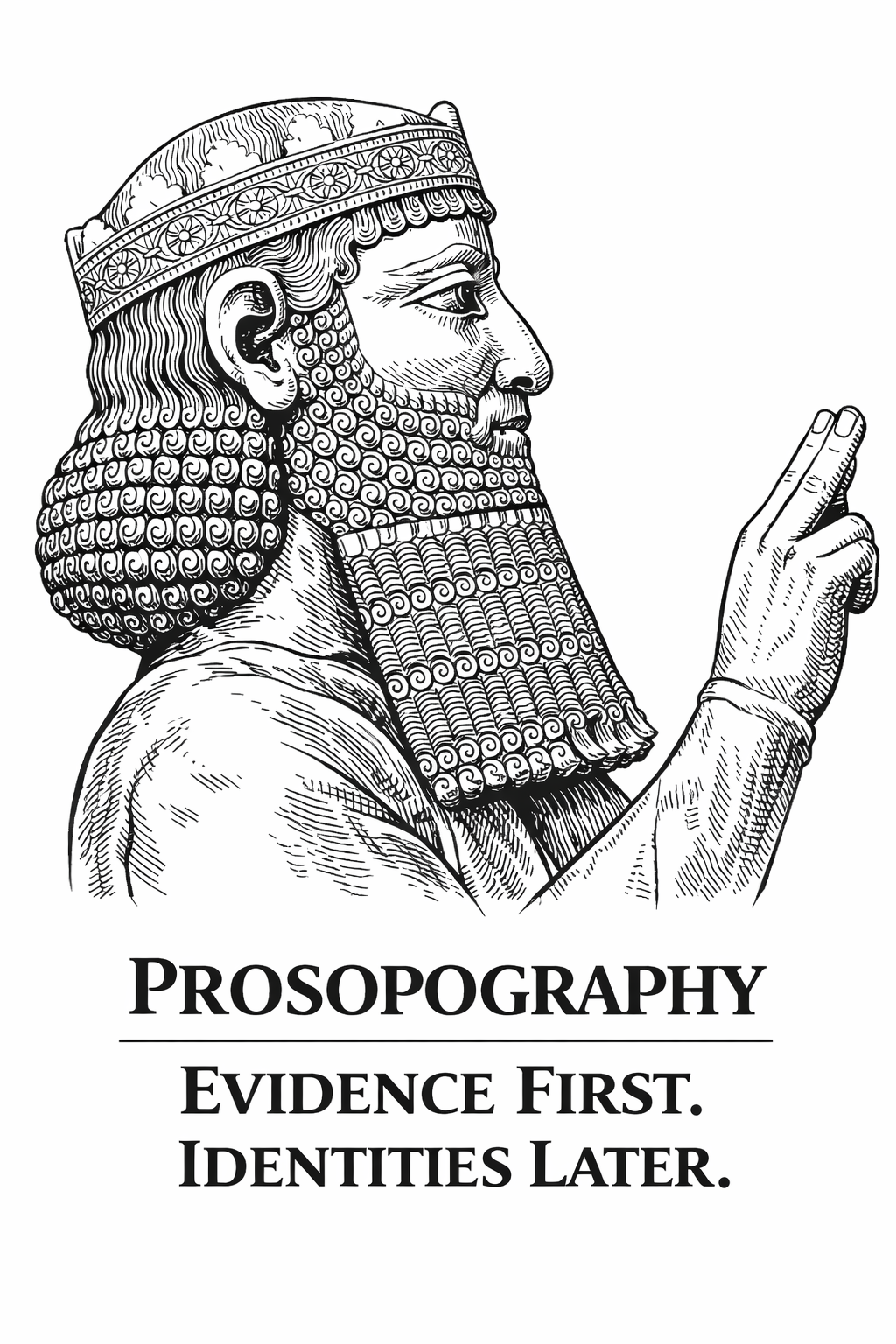
Profile Summary
In Ezra, Haggai, Zechariah, and Nehemiah, “Darius” functions primarily as an imperial Persian authority marker: decrees and archives in Ezra, and regnal dating formulas in the prophets and in Nehemiah’s priestly records.
Modern chronological correlation: this profile is commonly identified with Darius I (reigned c. 522–486 BC), often called “Darius the Great” in external historiography.
Textual Function
- Ezra 4–6: administrative opposition, official inquiry, archive search, decree confirmation, and enforcement.
- Haggai / Zechariah: regnal dating formulas anchoring prophetic ministry (“in the … year of Darius”).
- Nehemiah 12:22: regnal dating anchor for priestly/genealogical records.
Historical Background: Darius, King of Persia
In the books of Ezra, Haggai, Zechariah, and Nehemiah, Darius appears as an imperial Persian monarch whose reign provides both administrative authority and chronological anchoring. The biblical text does not offer a biography of Darius, nor does it describe his rise to power or personal character. Instead, it presupposes a stable, centralized empire with functioning archives, provincial governance, and enforceable royal decrees.
Within Ezra 4–6, Darius is portrayed as exercising imperial authority through bureaucratic mechanisms rather than personal intervention. Correspondence is exchanged between provincial officials and the royal court; an archival search is conducted; and a prior decree is located and reaffirmed. This portrayal assumes a king ruling over a system capable of record preservation and legal continuity, rather than a transient or localized ruler.
In Haggai and Zechariah, Darius functions primarily as a regnal dating reference: “in the second year of Darius,” “in the fourth year of Darius,” and similar formulas. These notices serve to anchor prophetic activity in time without attributing theological significance to the king himself. Nehemiah 12:22 similarly employs Darius as a chronological marker for priestly records, reinforcing the administrative and archival role associated with his reign.
Modern Historical Identification
Modern scholarship almost universally correlates the biblical “Darius king of Persia” with Darius I (reigned c. 522–486 BC), commonly known in external historiography as “Darius the Great.” This identification is based on chronological alignment, administrative scope, and the historical profile of Darius I as a consolidator and organizer of the Achaemenid Empire.
This identification is presented here as a historical correlation rather than a claim made by the biblical text itself. Scripture does not apply the epithet “the Great,” nor does it explicitly connect this Darius with external Persian king lists. The correlation rests on the convergence of independent historical data with the administrative assumptions present in the biblical narrative.
Archaeological and Epigraphic Evidence
The most significant archaeological source for the reign of Darius I is the Behistun Inscription, a trilingual monumental inscription commissioned by Darius himself. Carved in Old Persian, Elamite, and Babylonian, the inscription documents Darius’s consolidation of power and presents him as a lawful ruler exercising authority across a vast empire.
The Behistun Inscription demonstrates that Darius ruled through written proclamations, legal authority, and centralized administration. This aligns closely with the portrayal in Ezra 5–6, where royal decrees are preserved, consulted, and enforced across provincial boundaries.
Additional evidence comes from the Persepolis Fortification Tablets, which reveal a highly organized imperial bureaucracy involving record-keeping, taxation, resource distribution, and regional oversight. These tablets further corroborate the existence of a stable administrative system capable of sustaining the kind of archival continuity assumed by the biblical text.
Scholarly Contributions
Modern understanding of Darius I and the Persian imperial system has been shaped by scholars such as Pierre Briant, whose work emphasizes the administrative sophistication of the Achaemenid Empire; Amélie Kuhrt, who integrated Near Eastern sources with classical accounts; and A. T. Olmstead, who synthesized Persian inscriptions with Greco-Roman historiography in early modern scholarship.
These scholars are not engaged in biblical apologetics; rather, they reconstruct Persian history on the basis of inscriptions, administrative texts, and comparative historiography. Their work provides an external historical framework that helps explain why the biblical portrayal of Darius as an archival and administrative authority is historically plausible.
Limits of the Evidence
Archaeological evidence does not verify specific biblical decrees or religious motivations attributed to Persian kings. Instead, it confirms the broader historical setting: the existence of a powerful Persian monarch ruling through bureaucratic administration at the time when the biblical texts situate temple rebuilding and prophetic activity.
Accordingly, this page treats Darius, King of Persia, as a textual authority profile grounded in administrative and chronological function. Historical identification with Darius I is presented as a modern correlation, not as an assertion made by the biblical text itself.
Biblical References
Ezra
Haggai
Zechariah
Nehemiah
Notes
- This page treats “Darius” here as a textual authority profile (decree/dating usage), not as a full biography.
- “Darius the Great” is an external honorific and is used here only as a modern identification note.